

-
Book: Decentralised Energy

Decentralised Energy – A Global Game Changer Christoph Burger, Antony Froggatt, Catherine Mitchell, Jens Weinmann (eds.) The energy system is undergoing a fundamental transformation – from fossil to renewable energy, from central power plants to distributed, decentralised generation facilities such as rooftop solar panels or wind parks, from utilities to private residents as producers of energy, and from analogue to digital. This book looks at the energy transformation from two complementary angles: governance and business model innovation. On the one side, governance is a decisive factor for the success of the transformation because it can act as an accelerator,
Read More » -
Primer – RIIO

IGov Primer – RIIO Context We have produced a range of research and thinking on the RIIO price controls which cover gas and electricity transmission and distribution. As such it only relates to networks, which is only one of the dimensions of the GB governance process. Overall, we feel that RIIO is an improvement on RPI-X, but it is still a Business-as-Usual approach which is not well linked into the wider regulatory, policy or institutional landscape. Moreover, the signs from the current consultations are that ED2 will not be sufficiently stringent in order to ensure electricity
Read More » -
Presentation: Key Issues of Energy Policy and Net Zero

Key Issues of Energy Policy and Net Zero – Getting Governance Right From: Catherine Mitchell Presentation to: HMT Learning Week, 10th Dec 2019, London. Summary Key points Multiple drivers are altering energy system characteristics Energy economic are changing There is a ‘distribution’ gap of regulation / markets Economic regulation not keeping up with these possibilities Delivering net zero on time cannot be achieved with BAU Need a credible energy efficiency programme as a priority Justice and Engagement Data IGov frameworks Download the presentation: Treasury 10 Dec
Read More » -
Presentation: Lessons from GB, NY and Eastern Australia

Lessons from GB, NY and Eastern Australia From: Catherine Mitchell Presentation to: Northern Ireland – Renewing the Energy Vision, 9th Dec 2019, Belfast. Summary Changing energy systems BAU increasingly out of step with new drivers Where did the NI REV idea come from ? Lessons from NYS What needs to be in place to do it? What other lessons can be learn from around the world? Conclusions Download the presentation: NI REV Mitchell
Read More » -
Primer – the UK Capacity Market

IGov Primer – The UK Capacity Market Context IGov has consistently questioned the need for a Capacity Market in the UK low carbon transition, as well as the process by which it developed. It is a clear demonstration of how governance of the UK energy system can act to impede change in the direction of a more sustainable system. This Primer summarises the research and thinking we have produced on the Capacity Market. For an overview of the issues we see with the Capacity Market read the opinion piece on Britain’s dinosaur capacity market will
Read More » -
Primer – Local energy and the changing role of people

IGov Primer – Local energy and the changing role of people Context This Primer combines two interlinked areas of IGov research. One on our work on the growing importance of local energy, bringing in the changing role of city networks and local authorities, as well as the potential of more local energy systems to enable people to become more involved within the energy system. This links to our wider thinking on the changing role of people, as consumers, customers and citizens within energy systems and the case for putting them at the heart of the system
Read More » -
Book Chapter: Energy Governance in the United Kingdom
Energy Governance in the United Kingdom Lockwood M., Mitchell C., Hoggett R. (2019) In: Knodt M., Kemmerzell J. (eds) Handbook of Energy Governance in Europe. Springer, Cham Abstract The UK’s energy transition path has been shaped by a legacy of fossil fuel use across electricity generation, transport and heat, but also by the institutions and ideas that make up the governance of energy. Some important elements, such as a market-led policy paradigm and the delegation of regulation to arm’s-length bodies, are the result of privatization in the 1980s. Others, such as a heavily centralized, supply-led
Read More » -
Presentation: Proposal for an Energy Transformation Commission
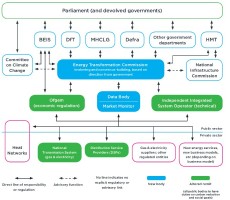
Proposal for an Energy Transformation Commission From: Rebecca Willis Presentation to: Reforming energy governance for net zero, 29th Oct 2019, London. Summary GB energy governance: current institutions and responsibilities GB energy governance: proposed new institutions and responsibilities Download the presentation: Willis_Governance roundtable_Proposal for an Energy Transformation Commission_Oct
Read More » -
Presentation: What reform is required of the current energy system/governance?
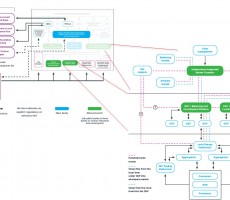
What reform is required of the current energy system/governance? From: Prof. Catherine Mitchell Presentation to: Reforming energy governance for net zero, 29th Oct 2019, London. Summary We need to reset our energy governance This does not need wholesale change It does need an new institution changes to existing institutions more coordination across sectors and scales more decentralisation of decisions and markets a new balance between direction and competition Download the presentation: Mitchell Governance roundtable – What reform is required Oct
Read More » -
Presentation: Getting Energy Governance Right
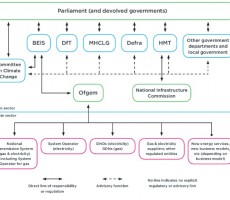
Getting Energy Governance Right From: Prof. Catherine Mitchell Presentation to: Reforming energy governance for net zero, 29th Oct 2019, London. Summary Definitions Energy governance is outdated Current institutions & responsibilities Reforming energy governance A new governance framework Conclusions Download the presentation: Mitchell Governance perspectives Oct
Read More »