












Plenary Speakers
The plenary speaker topics will cover a broad range of evolutionary biology and will be added as they are confirmed.
Dr Tom Currie - University of Exeter, UK | |
 | My research involves the application of modern evolutionary theory to investigate human behaviour. In particular I am interested in testing hypotheses about human pre-history and cultural evolution using quantitative techniques such as phylogenetic methods. Some of my work has a regional focus on the Austronesian-speaking societies of the Pacific and Island South-East Asia. |
Professor Troy Day - Queen's University, Canada | |
 | I am a mathematical biologist specializing in evolutionary biology. I am a Professor at Queen's University in the Department of Mathematics and Statistics and cross-appointed in the Department of Biology. |
Dr Andy Gardner - University of Oxford, UK | |
 | I work on Darwinian adaptation. Natural selection explains the appearance of design in the living world, but at what level is this design expected to manifest – gene, individual, society – and what is its function? Social evolution provides a window on this problem, by pitting the interests of genes, individuals and societies against each other. I develop general theory on the topics of inclusive fitness and multilevel selection, and also tailor general theory to the biology of particular species to facilitate empirical testing. I work on a wide range of biological systems, including viruses, bacteria, protozoa, crustaceans, insects, fish and humans. |
Professor Laurent Keller- University of Lausanne, Switzerland | |
 |
The goal of my research group is to understand the principles governing the evolution of animal societies and the ecological and evolutionary consequences of social life. To study these questions we combine disciplines of animal behaviour, ecology, evolutionary genetics and genomics. Our current interests include: ageing in social insects · experimental tests of kin selection · experimental robotics · genetic, ecological, and molecular bases for variation in social systems · division of labour in insect societies · causes and consequences of genetic determination · the fire ant genome · queen specialisation in multiple-queen colonies of social insects. |
Dr Britt Koskella- University of Exeter, UK | |
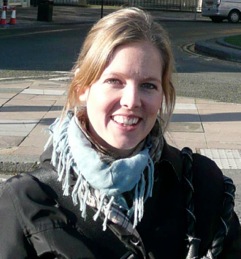 |
I am an evolutionary ecologist interested in the role that species interactions play in shaping the vast genotypic and phenotypic diversity found in nature. I look at how antagonistic interactions influence genetic diversity within populations, diversity between populations (i.e., across metapopulations in space), and ultimately species diversity at the community level. I combine laboratory-based, experimental evolution techniques with field studies of natural interactions between bacteria and bacteriophages to identify and address fundamental questions about community structure, coevolution, and abiotic environment as driving forces of diversity. |
Professor Judith Mank - University College London, UK | |
 | My research addresses evolutionary questions about the genome-phenotype relationship, and how selection acting on the phenotype enacts change within the genome. Most of my work involves applying population and molecular genetic tools to genomic and transcriptomic data to understand fundamental animal phenotypes. Many of the projects in my group use the differences between females and males in form, fitness and reproductive interest to examine the effects of sex-specific selection and sexual conflict in the genome. |
Professor Johanna Mappes - University of Jyväskylä, Finland | |
 | My area of interest overlaps between Evolution, Ecology and Animal Behaviour. One of my dearest research areas is interactions between predators and prey, defence strategies in insects and the relationship between defence and other life history traits. I am pathologically interested in colours and how animals use colouration in their defence. I have done a lot of research with my collaborators and students trying to understand how it is possible that such a strong selection pressure, predation, could have selected the wonderful diversity of animal coloration. I use several study systems: polymorphic, aposematic wood tiger moths, so called novel world set-up and artificial evolution in microcosm. |
Professor Geoff Parker - University of Liverpool, UK | |
 | Sperm competition – concepts, mechanisms, and evolutionary theory · Evolution of the two sexes · Evolutionary theory of sexual conflict, mating strategies, sexual selection · Competitive mate searching; competitive resource use and animal distributions · Evolution of animal fighting strategies; coercion and punishment · Evolution of sibling rivalry and intra-familial conflict · Optimality approach in evolutionary biology and behavioural ecology · Scramble competition in behaviour and ecology · Evolution of complex life cycles in helminths. |
Dr Paula Stockley - University of Liverpool, UK | |
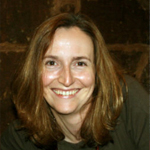 | My research aims to explain diversity in animal reproductive traits, with emphasis on mechanisms and evolutionary consequences of sperm competition and sexual selection, particularly in mammals. Current projects include experimental and comparative studies of ejaculate expenditure, copulatory behaviour, genital evolution, male mate choice and female competition. Multidisciplinary collaborations apply molecular and proteomics techniques to address evolutionary questions within these areas. |