Introduction
Increasingly Universities are being challenged about the “impact” of their research on society. Impact is however imprecisely defined stretching from changing public policy, changing the direction of a research field to interactions with industry, spin-out companies and licensing. Traditionally, Universities have excelled at teaching and research both are fundamental contributions to society in many intangible ways. As a scientist however we can contribute to the development of new technologies and plan their exploitation from the University laboratory to the market place. This suggest an “Academic Covenant” if you are spending tax payer’s money and there is an opportunity to produce a return then an academic should have an eye to the exploitation. Academics in general are not experts at this but some are becoming academic entrepreneurs and can provide valuable experience, perhaps leading to a sustainable University.
Attomarker Ltd
Attomaker is my second spin-out company (www.attomarker.com) and is developing the Array Reader technology in the allergy and antibody screening markets and the measurement of biomarkers of infection.

Multiple measurements of biomarkers simultaneously provide significantly more information than single markers but the data need to be interpreted. We have designed a series of algorithms for the analysis of infection and this has now been launched as research app (apex.attomarker.com) to provide new markers for the recovery of patients in hospital.
The Arkiris Project
Another excellent example of acacdemic entrepreneurship is the Arkiris project which is a joint collaboration with QinetiQ to exploit technology in the field of Tailored Electromagnetic Materials. The Arkiris project (link to www.arkiris.co.uk) is addressing the questions of Investor Culture and direct development of projects in the field. Butterfly wings are natural examples of functional electromagnetic materials with nanometre-scale structures controlling the iridescence colour of their wings. In collaboration with QinetiQ, the project is looking for ways to exploit the technology commercially to control electromagnetic radiation in specific areas of society. We have employed an entrepreneur and identified potential first products and work is proceeding on these development projects in the laboratory.
EvanesCo Ltd
I founded my first spin-out company EvanesCo Ltd to exploit the technique of evanescent wave cavity ring-down spectroscopy within a fibre optic for the detection of molecules in the environment. The work from the company continues in the group with research on the optical profiling of petroleum products in collaboration with the LPI. The company was set up in 2002, took on some VC funding and ultimately sold to Trireme Systems: a case study from company foundation to exit.
References
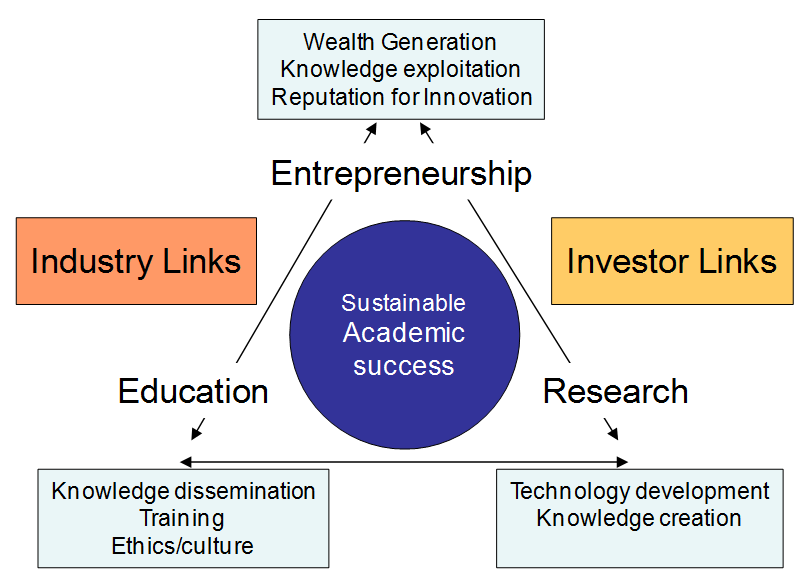
Figure 01
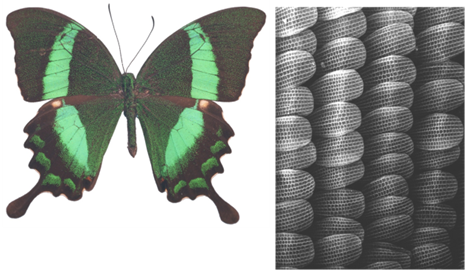
Figure 02

Figure 03

Arkiris Project

Evanesco